1407 S 31st St F, Temple, TX, 76504
Bonded & Insured
Temple, TX

Foundation Repair in Temple, TX Built for Blackland Prairie Clay Soil

If your doors suddenly stick in August or a stair-step crack has crept up your brick after a wet spring, you're not imagining it. Temple sits on deep Blackland Prairie clay, Houston Black and Heiden soils that swell after heavy rain and shrink hard through 100°F summers. That constant push and pull is why cracked drywall, sloping floors and separated trim are so common across Bell County. Temple Foundation Repair Masters stabilizes slab foundations, levels pier and beam homes, installs piers and corrects drainage, so your house stops moving with the weather.

We've worked on Central Texas foundations since 2020, from 1920s bungalows near downtown Temple to post-tensioned slabs in newer subdivisions toward Belton. We know how a lot in Salado can sit partly on limestone and partly on clay, and why the black gumbo around Troy and Little River-Academy needs piers set deeper. Every evaluation includes elevation readings, photos and a written report. Then you get clear repair options and an honest timeline, with no pressure.

  • Serving Temple and Bell County since 2020
  • Bonded and insured
  • Elevation readings, photos and a written report with every evaluation
  • Financing available
Free Estimate

Request Your Free Estimate

No obligation. Fast, honest quotes.

Prefer to talk? Call (254) 693-4064 — your details are never shared.

Credentials & Certifications BondedInsuredFinancing available
What We Do

Foundation Repair Services for Temple and Bell County

Every service below is matched to the soil and structure types we see across Bell County, from black clay east of I-35 to limestone near the escarpment. We recommend what your readings and inspection actually support, and nothing beyond that. Here's how each service works and where it fits.

★ Specialty

Foundation Inspection

A full evaluation with elevation readings across the floor, photos of every sign of distress and a written report that explains what's moving and why.

Digital elevation survey, crack mapping, exterior drainage and grading review, crawlspace check on pier and beam homes, and plumbing-leak indicators.

Useful for Temple and Belton buyers and sellers after a TREC inspection flags movement. Our readings and photos give a PE or lender the documentation they need.

Best for: Anyone noticing cracks, buyers under option periods, PCS sellers and landlords between tenants.

Explore
★ Specialty

Slab Foundation Repair

We stabilize and lift settled slab foundations with pilings driven beneath the perimeter and interior beams to firmer bearing.

Pressed concrete or steel piling to refusal, hydraulic lifting to a target elevation, and a documented pier layout and depth log.

Designed for Blackland Prairie clay in Temple, Troy and Heidenheimer, where piers often need to reach below the active clay zone.

Best for: Brick ranch homes and newer slab homes with stair-step cracks, sticking doors and sloping floors.

Explore

Pier and Beam Foundation Repair

We level older raised homes by replacing failed supports, re-shimming and correcting sagging beams.

Steel shims, new concrete pier pads, beam sistering or replacement, and added supports where spans are too long.

Careful work for Victorian and Craftsman homes near downtown Temple and Belton, protecting original floors and trim.

Best for: Bouncy, sloping or sagging floors in older or historic homes and rural farmhouses.

Explore

House Foundation Repair

Complete residential foundation diagnosis and repair for any foundation type.

Matches piering, shimming, drainage or crack repair to what elevation readings show.

Covers everything from Rogers farmhouses to Salado custom homes.

Best for: Homeowners who want one team to handle the whole problem.

Explore

Commercial Foundation Repair

We repair foundations under small commercial, retail, office and multi-unit buildings.

Piering, slab leveling and crack repair scheduled to limit disruption to business hours.

Serves storefronts and rental properties along the I-35 and Loop 363 corridors and in downtown Temple and Belton.

Best for: Property owners, investors and landlords with tenant-occupied buildings.

Explore

Foundation Raising

We lift settled sections of a house back toward level in a controlled way.

Hydraulic jacks on installed piers, lifting in small increments while we monitor cracks and doors.

Needed when drought shrinkage drops slab edges several inches on Temple-area clay.

Best for: Homes with measurable drops at corners or along one side.

Explore

Concrete Foundation Leveling

We restore a concrete foundation to a practical, consistent level.

Piering and lifting, guided by before-and-after elevation surveys.

We plan around heave so we don't lift sections that clay has already pushed up.

Best for: Slabs with uneven floors from mixed settlement and heave.

Explore

Concrete Slab Leveling

We lift sunken slab sections such as patios, walkways and garage floors.

Injection or piering, depending on slab use and the void beneath it.

Common after erosion or washouts near creeks and lake lots.

Best for: Sunken flatwork and trip hazards.

Explore

Concrete Slab Repair

We repair cracked, spalled or damaged slab sections.

Crack routing and filling, patching and partial replacement.

Addresses heat-related shrinkage and clay movement in slabs all over Bell County.

Best for: Damaged slab surfaces and localized failures.

Explore

Concrete Foundation Repair

General structural repair of poured concrete foundations.

Piering, crack injection, patching and reinforcement.

Fits both 1960s conventional slabs and modern post-tensioned slabs in Temple.

Best for: Any concrete foundation showing movement.

Explore

Poured Concrete Foundation Repair

We repair poured footings, beams and walls.

Epoxy or polyurethane injection, patching and underpinning.

Used on perimeter beams stressed by shrinking clay.

Best for: Cracked beams and footings.

Explore

Concrete Foundation Reinforcement

We add strength to weakened foundation sections.

Supplemental piers, added beams, doweling and bonded patches.

Helps on mixed limestone-and-clay lots where loads shift unevenly.

Best for: Foundations with repeat cracking.

Explore

Concrete Foundation Sealing

We seal exposed foundation surfaces and cracks against water.

Crack sealants and surface coatings.

Limits water reaching the clay during flash-flood storms.

Best for: Post-repair protection and wet sites.

Explore

Foundation Repairs

Full-scope repair after an evaluation, from minor to major.

Whatever combination the readings support.

Tuned to Bell County soil and climate.

Best for: Owners who want a complete plan.

Explore

Foundation Crack Repair

We seal and stabilize cracks in slabs and walls.

Injection, routing and sealing, with monitoring to confirm the cracks stay stable.

Drought cracks widen in Temple summers, so we repair the cause as well as the crack.

Best for: Visible cracks with no major elevation loss.

Explore

Foundation Patching

We patch spalled, chipped or eroded foundation concrete.

Bonding agent and structural patch mortar.

Common on exposed slab edges along washed-out lots.

Best for: Surface damage and exposed rebar.

Explore

Foundation Wall Repair

We repair cracked or bowing foundation and retaining-style walls.

Crack injection, reinforcement and drainage behind the wall.

Fits sloped lakeside lots in Morgan's Point Resort.

Best for: Cracked or leaning foundation walls.

Explore

Concrete Wall Crack Repair

We seal cracks in concrete walls.

Epoxy for structural bonding, polyurethane for water stopping.

Used on stem walls and garage walls across Temple.

Best for: Vertical and diagonal wall cracks.

Explore

Concrete Floor Crack Repair

We repair cracks in interior and garage floors.

Routing, filling and leveling compounds.

Common under cracked tile in post-1980s slab homes.

Best for: Floor cracks before reflooring.

Explore

Stem Wall Repair

We repair the perimeter stem walls that support raised homes.

Crack repair, underpinning and partial rebuilding.

Common on older Temple and Belton homes with perimeter stem walls.

Best for: Cracked or settling stem walls.

Explore

Concrete Block Foundation Repair

We repair or replace failing block piers and walls.

Re-setting, replacing with poured piers and re-shimming.

Block piers are common under 1920s–1940s Temple homes.

Best for: Cracked or leaning block piers.

Explore

Concrete Pier Foundation Repair

We repair or replace concrete piers.

New poured or pressed piers on proper pads.

Replaces shallow piers that have sunk into the clay.

Best for: Sunken or cracked piers.

Explore

Crawl Space Repair

We fix crawlspace structure and moisture issues.

Support repair, ventilation improvement and moisture control.

Damp crawlspaces are common in older homes after spring storms.

Best for: Musty, damp or sagging crawlspaces.

Explore

Crawl Space Foundation Construction

We build new crawlspace foundations.

Engineered pier layout, beams and ventilation.

Fits rural lots and additions on deep clay.

Best for: New builds, additions and rebuilds.

Explore

Foundation Installation

We install new foundations for structures and additions.

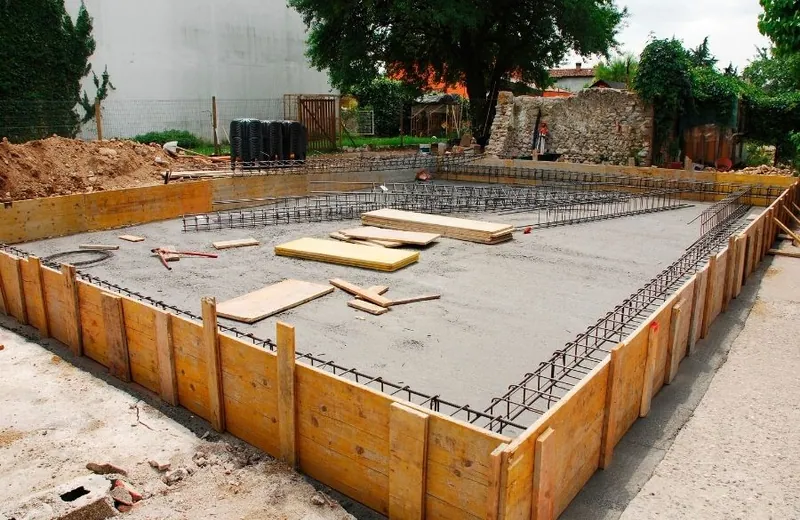
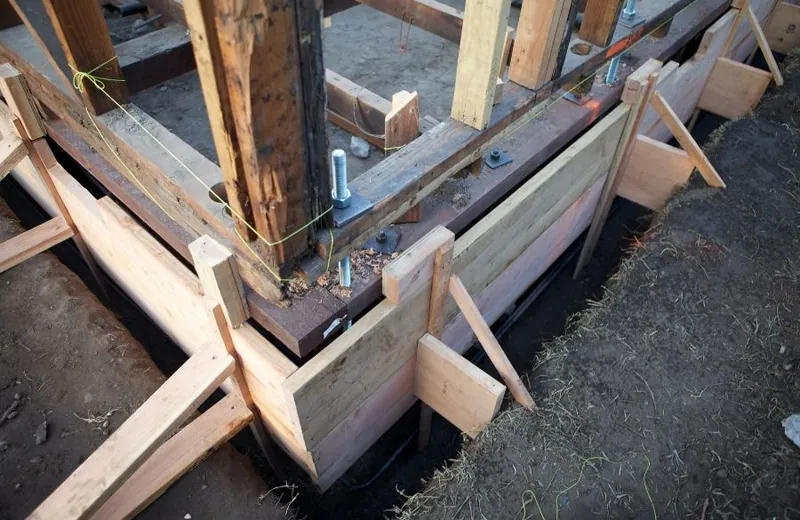
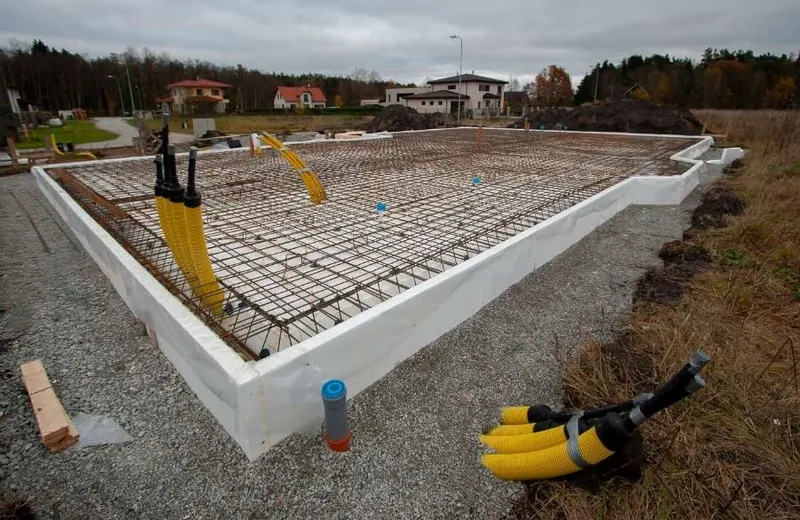
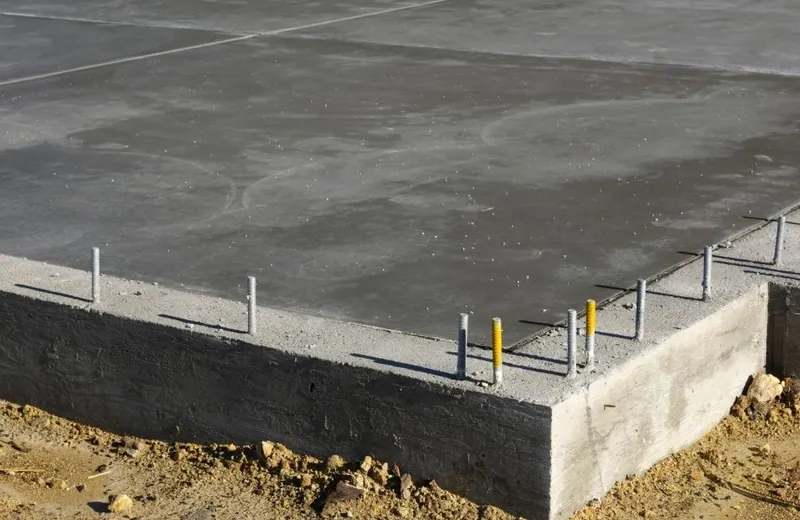
Site prep, forming, reinforcement and pour.

We account for clay or limestone conditions on the site.

Best for: Additions, outbuildings and replacements.

Explore

Foundations

New and replacement foundation work of all types.

Slab, pier and beam and crawlspace systems.

Planned around Bell County soil behavior.

Best for: Building or replacing a foundation.

Explore
★ Specialty

Foundation Drainage

We keep water from saturating or washing out the clay under your home.

French drains, surface drains, regrading, downspout extensions and root-barrier coordination.

Sized for Flash Flood Alley downpours and graded to fit HOA rules in newer subdivisions.

Best for: Pooling water, heave and repeat cracking.

Explore

Concrete Slab Leak Repair

We coordinate leak diagnosis and slab access for under-slab plumbing failures.

Testing and repairs by a Texas-licensed plumber, plus slab tunneling or cutting, restoration and releveling.

Common with aging cast-iron sewers in mid-century Temple homes.

Best for: Sudden localized movement or high water bills.

Explore

Garage Foundation Repair

We repair settled or cracked garage slabs and footings.

Piering, slab leveling and crack repair.

Thinner garage slabs show clay movement first.

Best for: Cracked or sloping garage floors.

Explore

Driveway Foundation Repair

We level and repair sunken or cracked driveways.

Slab lifting, crack sealing and drainage fixes.

Common after wet-dry swings in Temple and Belton neighborhoods.

Best for: Sunken panels and trip hazards.

Explore

Concrete Repairs

General concrete repair around your property.

Patching, crack sealing and leveling.

Addresses heat and clay damage common across Central Texas.

Best for: Walkways, patios and steps.

Explore
Know The Signs

Common Foundation Problems We See Around Temple

Most foundation calls in Bell County trace back to a handful of problems that come from the area's clay, limestone and weather. Knowing which one you're dealing with, and how urgent it is, helps you make a calm, informed decision instead of a panicked one.

Perimeter Slab Settlement from Clay Shrinkage Serious

The outer beam of a slab foundation drops when the clay beneath it dries and shrinks. The center of the slab stays supported while the edges sink, which bends the structure above. It's the most common foundation failure in the Temple area.

Why it's common here

Houston Black and Heiden clays lose a lot of volume as they dry. During summers with weeks of 100°F+ heat, the top few feet of soil along a home's perimeter dries out first, and that's exactly where the slab's edge beam bears its load. Large live oaks and pecans planted close to the house pull even more moisture. Watering restrictions in drought years make it worse because many homeowners stop watering their foundation zone entirely.

Signs you'll notice
  • Stair-step cracks in brick veneer
  • Doors that stick or won't latch, especially in late summer
  • Gaps between baseboards and the floor
  • Diagonal drywall cracks at window and door corners
  • Separated frieze boards or trim at the roofline
  • Exterior gap between the slab and brick ledge
Local patterns

We see this constantly in 1950s–1970s brick ranch homes in central and north Temple and older Belton, and on slabs near mature trees in West Temple. It usually shows up after drought summers like 2022 and 2023.

Our fix: Pressed concrete or steel pilings driven along the settled perimeter to stable strata, followed by controlled lifting and drainage or watering corrections to stabilize soil moisture.

Slab Heave and Edge Lift Moderate

Heave is the opposite of settlement. Clay absorbs water, swells and pushes part of the slab upward, often the center or one edge. It can look like settlement, which is why elevation readings matter before anyone recommends piers.

Why it's common here

When Central Texas swings from drought into a wet spring or a run of flooding rains, dried clay swells fast. Lots near the Leon River, Little River, Nolan Creek and Pepper Creek can stay saturated for weeks. Downspouts that dump next to the slab and poorly graded subdivision lots feed water straight to the foundation. If you pier a heaving slab like a settling one, you can lock in the problem instead of fixing it.

Signs you'll notice
  • Hump or crown in the middle of a room
  • Cracked floor tile running across the house
  • Interior doors that rub at the top
  • Cracks that open after heavy rain rather than drought
  • Soggy soil or standing water along one side
Local patterns

Common in newer post-tensioned subdivisions west and south of Temple along Loop 363 and toward Belton, where lot grading sends water toward the house, and on deep black clay around Heidenheimer and Troy.

Our fix: Drainage correction, gutters and grading to control moisture, sometimes combined with selective piering of low areas once readings confirm the true high point.

Deteriorated Pier and Beam Supports Serious

Older homes rest on wood posts, concrete-block piers or short concrete piers under wood beams. Over time those supports rot, sink, crack or shift, so floors sag, bounce or slope toward the middle of the house.

Why it's common here

Many Temple homes from the late 1800s to the 1930s still sit on their original supports, set on shallow pads over clay that has been swelling and shrinking for a century. Crawlspaces often have poor ventilation and hold moisture after storms, which rots wood and invites termites. Over the decades, owners have added shims, bricks and leftover blocks piecemeal, so the support layout under many of these homes is inconsistent and undersized.

Signs you'll notice
  • Bouncy or soft floors
  • Floors sloping toward the center or one wall
  • Doors and windows that bind
  • Damp, musty crawlspace
  • Visible rot, termite damage or leaning piers
  • Gaps at interior wall-to-ceiling joints
Local patterns

Concentrated in Downtown Temple, the blocks around the railroad and hospital district, downtown Belton near UMHB, historic Salado, and older farmhouses in Rogers, Holland, Pendleton and Bruceville-Eddy.

Our fix: Re-shimming with steel shims, replacing failed piers with poured or pressed concrete supports, sistering or replacing beams, and improving crawlspace ventilation and moisture control.

Under-Slab Plumbing Leaks Emergency

A leaking supply or sewer line beneath a slab saturates the clay in one spot. That soil swells or washes out, and the foundation moves around the leak, often with no visible water inside the house.

Why it's common here

Homes built from the 1940s through the 1970s often have cast-iron sewer lines that corrode and crack after 50+ years in active clay. The February 2021 freeze also stressed plumbing across Bell County. Because clay holds water, a slow leak can go unnoticed for months while the soil around it heaves. Plumbing must be tested and repaired by a Texas-licensed plumber before or alongside any leveling.

Signs you'll notice
  • Unexplained jump in water bill
  • Warm spots on the floor
  • Sewer odor or slow drains throughout the house
  • Localized floor cracks or a new hump in one room
  • Damp carpet or tile with no visible source
Local patterns

Most common in brick ranch homes in central and North Temple and older Belton with original cast-iron drains, and in homes where floors moved suddenly after the 2021 winter storm.

Our fix: Hydrostatic or static plumbing tests by a licensed plumber, leak repair, then foundation leveling once the soil has stabilized. We coordinate the sequence so nothing gets done twice.

Differential Settlement on Mixed Limestone and Clay Serious

Part of the house bears on shallow limestone while another part sits on a clay seam or fill. The two areas move at different rates, which twists the structure and cracks it diagonally.

Why it's common here

Belton, Salado, Morgan's Point Resort and Nolanville sit along the Balcones Escarpment, where soils thin out over Edwards limestone with irregular pockets of clay. Depth to stable bearing can change from a few feet to much deeper within the same lot. A builder may have graded fill over a low spot or a clay pocket, and that section settles while the rest stays put. Pier design has to account for this variation instead of using one standard depth.

Signs you'll notice
  • Long diagonal cracks across a wall or slab
  • One corner of the house noticeably lower
  • Cracks concentrated on one side only
  • Retaining walls leaning or cracking nearby
  • Windows racked out of square on one end
Local patterns

Seen on sloped, rocky lakeside lots in Morgan's Point Resort and around Lake Belton, in Salado's hill country edges, and in Nolanville subdivisions built on mixed cut-and-fill pads.

Our fix: Targeted piering only on the moving section, driven to refusal or bearing rock, with documented depths and lift measured against the stable portion of the slab.

Drainage and Erosion Around the Foundation Moderate

Water that pools against the foundation, or soil that washes away from it, removes support or oversaturates the clay. It's often the root cause behind cracks that keep coming back after a repair.

Why it's common here

Bell County sits in Flash Flood Alley, and spring thunderstorms can drop inches of rain in an hour. Hail regularly damages gutters, and downspouts left emptying beside the slab feed clay directly. New subdivision lots are often graded flat or toward the house. Near creeks and lake slopes, runoff erodes soil from under slab edges and footings.

Signs you'll notice
  • Standing water near the foundation after storms
  • Soil pulling away from or washed out under the slab edge
  • Missing, clogged or hail-damaged gutters
  • Downspouts discharging right at the wall
  • Mildew or water stains on interior walls near grade
Local patterns

Typical in newer Temple and Belton subdivisions with tight side yards, lakeside Morgan's Point Resort lots, and homes near Nolan Creek, Pepper Creek and Salado Creek.

Our fix: Regrading, French drains, surface drains, downspout extensions and catch basins that move water at least several feet from the foundation, sized for Central Texas downpours.

Cosmetic Slab, Garage and Flatwork Cracks Minor

Hairline shrinkage cracks in slabs, garage floors, driveways and walkways. Many are normal concrete curing cracks. Others are early warnings that the clay underneath is moving.

Why it's common here

All concrete shrinks as it cures, and Central Texas heat speeds that up. Driveways and garage slabs are usually thinner and less reinforced than house foundations, so clay movement shows up there first. Sunken sidewalk panels and driveway joints are common after a wet-dry cycle.

Signs you'll notice
  • Hairline cracks under 1/8 inch with no offset
  • Sunken driveway or sidewalk panels
  • Cracks at garage slab corners
  • Trip hazards at joints
  • Weeds growing through cracks
Local patterns

Shows up across every era of housing, especially garage slabs in 1960s–1970s Temple homes and driveways in Western Hills and Wildflower Country Club area subdivisions.

Our fix: Crack sealing and patching, slab leveling of sunken panels, and monitoring. If a crack widens or offsets, we take elevation readings to check for structural movement.

Transparent Pricing

Foundation Repair Cost in Temple, TX

Most Temple-area foundation repairs cost a few thousand dollars, though a full stabilization can run well beyond that. The figures below are typical ranges for Central Texas. Your written estimate will itemize the exact scope based on your elevation readings.

Typical Project

Corner settlement on a 1970s brick ranch

North Temple, ~1,600 sq ft slab, 8 pressed concrete pilings at one corner

$3,500 – $7,000
Typical Project

Pier and beam leveling on an older bungalow

Near downtown Temple, re-shimming, 6–10 replaced supports, minor beam work

$2,500 – $8,500
Typical Project

Full perimeter stabilization on a newer slab

West Temple or Belton, ~2,400 sq ft, 18–24 piers plus drainage correction

$10,000 – $22,000
Typical Project

Drainage and crack repair only

Salado or Nolanville, French drain, downspout extensions, crack sealing

$1,800 – $5,500
Number and Type of Piers Primary Factor

Pier count drives most slab repair costs. Pressed concrete pilings often run roughly $300–$600 each installed in this market, and steel piers commonly cost about $1,000–$2,000 each. A corner drop might need 6–8 piers, while full perimeter settlement can take 20 or more. That's why your estimate should show a pier layout instead of a vague lump sum.

Soil and Depth to Stable Bearing Primary Factor

On deep Blackland clay around Temple, Troy and Heidenheimer, piers may need to go considerably deeper to get below the active zone, which adds labor and material. Near Belton and Salado, shallow limestone can shorten piers, but mixed rock and clay may call for different pier types on the same house. Soil conditions are a big reason two similar homes get very different quotes.

Foundation Type and Access Secondary Factor

Pier and beam leveling is often less expensive than slab piering when the job is mostly re-shimming and replacing supports. Low crawlspaces, rotted beams or tunnel work under a slab will raise the cost. Interior piers that require breaking through flooring, or tight access on lakeside lots, also add time.

Plumbing and Drainage Corrections Secondary Factor

If a cast-iron sewer leak caused the movement, testing and repair by a licensed plumber is a separate cost, often several hundred to several thousand dollars. Drainage work such as French drains, regrading and gutters typically adds $1,500–$6,000. Skipping these steps often means the foundation problem comes back.

Permits, Engineering and Restoration Additional Factor

City permit fees in Temple or Belton, an independent PE letter if your lender asks for one, and cosmetic repairs to drywall, tile or brick afterward can all add to the total. We list what's included so you can budget for the rest.

Financing is available, so you can stabilize your foundation now and pay over time. Ask about options during your estimate review. Unrepaired movement keeps getting worse with every drought and wet season, and it usually comes up at resale. A documented repair with pier records protects your home's value and helps keep closings on track.

Local Expertise

Why Temple Homes Need Foundation Repair More Than Most

Foundation trouble in Temple isn't bad luck. It comes from three local facts: some of the most expansive clay in Texas, a climate that swings between drought and downpour, and housing that runs from 1880s railroad-era homes to new post-tensioned slabs. Here's how each one affects your house.

Blackland Prairie Clay and a Drought-to-Deluge Climate

East of I-35, around Temple, Heidenheimer, Rogers, Holland, Troy and Moody, the ground is deep Vertisol clay with very high shrink-swell potential. In dry stretches it shrinks and splits open in cracks you can drop a pencil into. Temple averages about 33–36 inches of rain a year, but it comes unevenly. Wet springs and falls alternate with summers in the mid-to-upper 90s, and drought years like 2011, 2022 and 2023 brought long runs of 100°F+ days. Slab edges lose support and drop in the heat, then heave when storms soak the soil again. West toward Belton, Salado and Morgan's Point Resort, the Balcones Escarpment adds another problem: thin, stony soil over limestone with seams of clay, so one end of a house can sit on rock while the other moves with the clay.

A Housing Stock Layered by Era

Temple was founded in 1881 as a Santa Fe railroad town, and you can still read its history in its foundations. Victorian and Craftsman homes near downtown and the hospital district sit on original pier and beam, often with rotted or undersized piers that have been shimmed piecemeal for decades. Brick ranch homes from the 1940s–1970s in central and north Temple have conventional slabs, cast-iron sewer lines that fail beneath them, and stair-step cracks in the brick. Since the 1980s, slab-on-grade and post-tensioned slabs have dominated the subdivisions spreading west and south along Loop 363 and I-35. In those neighborhoods, edge lift, corner cracks and poorly graded lots are the usual problems.

Permits, Engineers and Real Estate Deadlines

Texas has no state license for foundation repair contractors, so documentation matters. Bell County buyers and lenders often ask for a licensed Professional Engineer's letter after a TREC-format inspection flags movement, and they want pier counts and depths in writing. The City of Temple and the City of Belton generally handle structural repair through residential building permits, and requirements should be confirmed with the city before work begins. Smaller towns and unincorporated Bell, McLennan and Falls County areas each have their own rules. Under-slab leak repairs require a Texas-licensed plumber, every exterior pier excavation needs a Texas811 locate, and historic homes in downtown Temple, Belton and Salado call for extra care with original materials.

A Market That Moves Fast

Temple has roughly 82,000 residents and keeps growing alongside Baylor Scott & White, the VA medical center and the I-35 distribution corridor. Military families connected to Fort Cavazos buy, sell and rent out homes on fixed PCS timelines. Retirees in Salado and Morgan's Point Resort want a contractor they can trust for the long haul. Home prices are moderate compared with Austin, so owners want itemized estimates and financing options, and they want to know a repair will protect their home's resale value.

Temple Foundation Repair Masters Foundation Repair Company in Temple, TX project in Temple, TX (1)
Temple, TX
Temple Foundation Repair Masters Foundation Repair Company in Temple, TX project in Temple, TX (2)
6+ Years
Talk to a Local Expert
The Temple Foundation Repair Masters Difference

Why Temple Homeowners Choose Temple Foundation Repair Masters

We Know Bell County Ground, Lot by Lot

A foundation in Heidenheimer and one in Morgan's Point Resort may look alike, but they sit on very different ground. East of I-35, deep Houston Black clay usually means piers have to go deeper to get below the active zone. Near the escarpment, you might hit limestone a few feet down on one corner and clay on another. Since 2020 we've worked across both, and we design each repair around what's actually under your house, not a one-size template carried over from another market.

Documentation You Can Hand to a Buyer, Lender or Engineer

Texas doesn't license foundation repair contractors, so paperwork is your protection. Every evaluation includes elevation readings, photos and a written report. When we do the work, you receive the pier layout, depths and post-repair readings. That's the kind of record a Professional Engineer, lender or future buyer will ask for, and it matters a lot in a market where PCS moves and option periods leave very little room for delays.

Bonded and Insured

Foundation work means excavation beside your home, heavy hydraulic equipment and crews working in tight crawlspaces. We're bonded and insured, so you're protected if something goes wrong on the job. Ask any contractor you're considering to show proof of both before they start digging. We're glad to provide ours, along with clear written terms describing the work we'll do.

Honest Options, Not High-Pressure Sales

Plenty of homeowners around Temple have heard a pitch for 30 piers when the readings only supported a handful, or were told drainage alone was enough when it wasn't. We give you clear repair options, explain what each one fixes and what it doesn't, and tell you plainly when watering or gutters will do the job. If the problem is heave, we'll tell you that too, instead of selling piers that won't help.

Careful Work on Older Pier and Beam Homes

Many homes near downtown Temple, around the hospital district and in downtown Belton and Salado still stand on original pier and beam foundations, often with a century of piecemeal shims underneath. We stabilize them carefully: replacing failed supports, correcting beams and leveling gradually so plaster, trim and original floors aren't stressed. Where preservation expectations apply, we work to keep the exterior appearance intact.

Financing for Real-World Budgets

Foundation repair rarely shows up at a convenient time, and it usually comes up just as you're dealing with a closing, a move or a tenant change. Financing is available, so you can fix the problem now instead of waiting through another drought summer while cracks widen. Your estimate is itemized, so you know exactly what you're paying for before you decide.

We Actually Drive Out to Rural Bell County

We serve communities within about 20 miles of Temple, including small towns that larger companies tend to skip, such as Rogers, Holland, Troy, Pendleton and Bruceville-Eddy. Farmhouses on pier and beam and slab homes on deep black clay out there need the same careful evaluation as a house in town, and they get it. If you're near the edge of our range, call and we'll tell you honestly whether we can serve you.

Simple & Transparent

How Our Foundation Repair Process Works

No surprises, no vague pier counts. Here's what happens from your first call to the final readings, with the local permit and utility steps built in.

Schedule Your Evaluation

Usually within a few days of your call
  • We ask about cracks, doors and when you first noticed changes
  • We note any real estate or PCS deadlines
  • We confirm your address is within our service area
  • We set a time that works for you

Local note: If you're in an option period after a TREC inspection, tell us your deadline so we can try to prioritize your evaluation.

On-Site Inspection and Elevation Survey

About 1–2 hours on site
  • We take elevation readings across the entire floor
  • We photograph cracks, gaps and exterior distress
  • We check drainage, grading, gutters and nearby trees
  • We inspect the crawlspace on pier and beam homes
  • We look for signs of under-slab leaks

Local note: We look for limestone-versus-clay differences on Belton, Salado and lakeside lots.

Written Report and Repair Options

Typically within a few days of the inspection
  • You get a written report with readings and photos
  • We give you clear repair options, including the minimum effective fix
  • We provide an itemized estimate with pier count and layout
  • We go over financing if you want it

Local note: If your lender or buyer requires a PE letter, our report gives the engineer documented data to work from.

Permits, Utility Locates and Repair

Most slab and pier and beam repairs take 1–3 days
  • We confirm permit requirements with Temple, Belton or the local jurisdiction
  • We call Texas811 for utility locates before any digging
  • A licensed plumber tests plumbing if a leak is suspected
  • We install piers, lift or shim, and log every depth
  • We backfill and clean up

Local note: In HOA neighborhoods, we follow rules on equipment staging and work hours.

Final Readings and Documentation

Same day the work is completed
  • We take post-repair elevation readings
  • We check doors, cracks and plumbing
  • You get the final pier layout and depth records
  • We give you drainage and watering advice for clay soil

Local note: Keep these records. Buyers in Bell County routinely ask for them at resale.

Trusted Locally

Bonded, Insured and Serving Bell County Since 2020

Serving Central Texas Since
2020
Temple, TX
14
Communities Served
20 mi
Service Radius from Temple
100%
Evaluations with Written Reports
BondedInsuredFinancing available
Where We Work

Foundation Repair Service Areas Around Temple, TX

We serve Temple and the surrounding Bell County communities, plus nearby towns to the north along I-35. Soil changes a lot across this area, from deep black clay in the east to limestone along the escarpment, so we plan every repair around local conditions.

Temple and the Eastern Blackland Clay Belt

TempleHeidenheimerLittle River-AcademyRogersHolland

North Along I-35

TroyPendletonMoodyEddyBruceville-Eddy

Belton, the Lakes and the Escarpment

BeltonMorgan's Point ResortSaladoNolanville

Not sure if we cover your area? Call (254) 693-4064.

Find Us

Serving Temple, TX & Nearby

1407 S 31st St F, Temple, TX, 76504 · Mon-Fri: 7:00 AM - 9:00 PM · Sat-Sun: 7:00 AM - 6:00 PM

TempleHeidenheimerLittle River-AcademyRogersHollandTroyPendletonMoodyEddyBruceville-EddyBeltonMorgan's Point ResortSaladoNolanville
Questions & Answers

Foundation Repair FAQs for Temple Homeowners

How much does foundation repair cost in Temple, TX?

Most Temple-area repairs fall between about $3,500 and $10,000. Simple drainage or crack work can cost less, and full perimeter stabilization on a large slab can exceed $20,000. Pier count, pier type and how deep the piers have to go into Blackland clay drive most of the price. Pier and beam leveling is often on the lower end unless beams need replacing. If an under-slab plumbing leak is involved, the licensed plumber's work is a separate cost. After we take elevation readings, you'll get an itemized written estimate with a pier layout, and financing is available.

How long does foundation repair take?

Most residential slab or pier and beam repairs take 1–3 days of on-site work. Larger jobs with 20+ piers, interior tunneling or added drainage can take longer. Planning time is separate: the evaluation, written report, permit confirmation with Temple or Belton, and a Texas811 utility locate before excavation can add several days. If you're working against a real estate option period or a PCS date, tell us up front so we can plan the schedule around your deadline.

Do I need a permit for foundation repair in Temple or Belton?

Usually, yes. The City of Temple and the City of Belton generally handle structural foundation work through residential building permits issued by their development or building services offices. Requirements can change, so we confirm them before work starts. Smaller towns like Nolanville, Salado, Morgan's Point Resort and Troy, along with unincorporated Bell, McLennan and Falls County areas, have their own rules, and some require very little. Under-slab plumbing repairs must be done by a Texas-licensed plumber, and every exterior pier excavation needs a Texas811 locate first.

Does Texas license foundation repair contractors?

No. Texas has no state license specifically for foundation repair, which is why documentation matters so much. Ask any contractor for proof of bonding and insurance, an itemized pier count and layout, and depth records after the work is done. Many Bell County buyers and lenders also want a letter from a licensed Professional Engineer. We're bonded and insured, and our elevation readings, photos and written reports give an engineer the data they need for that review.

How can I prevent foundation problems on clay soil?

The goal is steady soil moisture. Keep gutters clean and hail damage repaired, and extend downspouts several feet from the slab. Make sure the soil slopes away from the house. During drought, water the foundation zone consistently with a soaker hose about 12–18 inches from the slab, within any city watering restrictions. Avoid planting thirsty trees like live oaks and pecans close to the house, or ask about root barriers. Fix plumbing leaks quickly, especially in older homes with cast-iron drains.

When should I call about cracks instead of waiting?

Call soon if cracks are wider than about 1/4 inch, if one side of a crack sits higher than the other, if new stair-step cracks show up in brick, or if doors suddenly won't latch. Call right away if movement comes with a jump in your water bill, warm floor spots or sewer odor, because those can mean an under-slab leak that keeps swelling the clay. Hairline cracks that don't change are often cosmetic, but readings are the only way to know for sure.

Is my foundation settling or heaving?

You can't reliably tell by looking. Both cause cracks and sticking doors. Settlement usually gets worse in hot, dry Temple summers as the perimeter drops. Heave often shows up after wet springs, when swelling clay pushes up the center or one side. Elevation readings across the whole floor reveal which areas are high and which are low. That distinction matters, because piering a heaving slab the same way as a settling one can make the problem worse.

Can you help if a home inspection flagged my foundation during a sale?

Yes, and this is one of the most common calls we get in Temple, Belton and Nolanville. After a TREC inspection notes movement, we can schedule an evaluation, document elevation readings and photos, and give you a written report with repair options. That's often what a buyer, seller or engineer needs to move forward. If repairs go ahead, the pier layout and depth records become part of your sale documentation. Tell us your option-period or PCS deadline when you call.

Get Your Temple Foundation Evaluated Before the Next Dry Spell

Clay soil doesn't stop moving on its own. A careful evaluation now, with real elevation readings, tells you exactly what's happening and what it will take to fix it.

  • Elevation readings across your entire floor
  • Photos of every crack and sign of movement
  • A written report you can share with buyers, lenders or an engineer
  • Clear repair options and an itemized estimate
  • An honest timeline, with no high-pressure sales
  • Bonded and insured crews
  • Financing available

Serving Temple, Belton, Salado, Troy, Little River-Academy, Nolanville, Morgan's Point Resort and communities within about 20 miles.

Seeing sudden movement along with a high water bill or sewer odor? It may be an under-slab leak. Call now so we can help you sort out the next steps.

Bonded • Insured

Call (254) 693-4064 Free Estimate